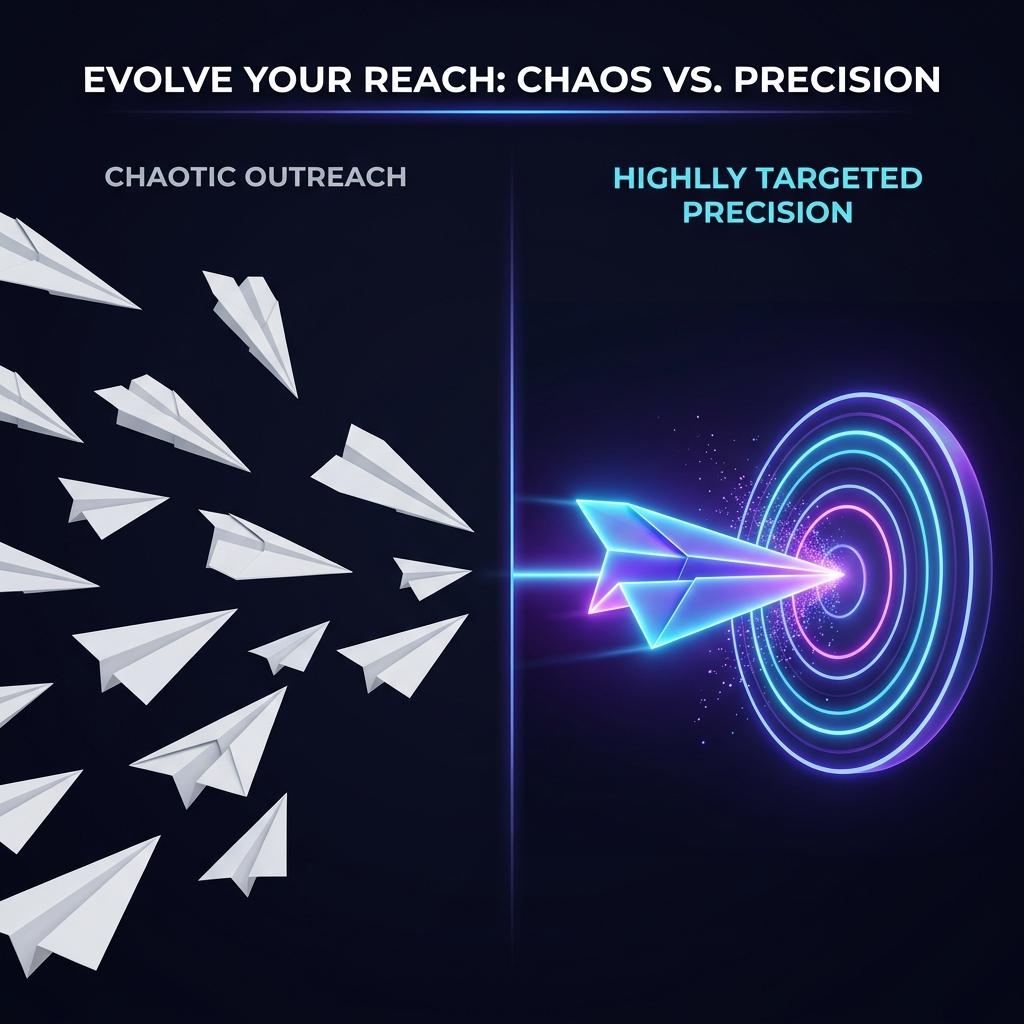
- Mass outreach is mathematically broken. Average B2B cold email reply rates dropped from 8.5% in 2019 to barely 3% in 2026.
- Volume triggers spam filters. Email providers now use AI to identify and penalize repetitive template patterns.
- Timing beats volume. Reaching out within 48 hours of a buying signal yields a massive first-mover advantage.
- Signals drive conversion. Teams utilizing signal-based frameworks report 3x to 5x higher response rates than those relying on static lists.
What is signal-based outreach?
Signal-based outreach focuses entirely on timing and context. Instead of reaching out because an account matches an ideal customer profile, you reach out because a specific event indicates they are in an active buying window.
These events are known as trigger signals. A static list tells you a company is the right size. A trigger signal tells you they have a problem you can solve right now.
Examples of strong outbound signals include leadership changes, sudden surges in hiring for specific roles, new funding rounds, and behavioral intent like repeated website visits.
When you base your outreach on these signals, your message stops being a cold interruption. It becomes a highly relevant resource arriving at the exact moment the prospect needs it.
Why did spray and pray stop working?
The decline of high-volume cold email did not happen overnight. It was a slow death caused by market saturation and smarter technology.
First, the barrier to entry dropped to zero. Anyone could buy a list and spin up a sequence. Inboxes became flooded with identical pitches. Buyers adapted by ignoring everything that looked like a template.
Second, email providers like Google and Microsoft deployed advanced AI spam filters. These systems no longer just look for bad keywords. They analyze sending patterns. If you send the exact same sequence to 5,000 people, the filters will catch you and destroy your domain reputation.
Finally, the math stopped making sense. As reply rates plummeted from historical highs of 8.5% down to 3%, companies tried to compensate by doubling their sending volume. This only accelerated the deliverability issues.
How do signal-based and generic outreach compare?
The performance gap between these two strategies is massive. The data clearly shows that targeted precision wins out over sheer volume.
| Metric | Traditional (Spray & Pray) | Signal-Based Outreach |
|---|---|---|
| Typical Reply Rate | 1% to 5% | 15% to 25% |
| Primary Driver | Static lists and volume | Intent and behavioral triggers |
| Conversion Impact | Low conversion, high churn | 3x to 5x higher conversion |
| Strategy Approach | Broad and generic | Contextual and highly personalized |
| Domain Risk | High risk of spam placement | Low risk due to low volume |
How do you build a signal-based outbound strategy?
You have to shift your focus from capturing leads to tracking intent. The first step is defining which signals actually correlate with a purchase of your product.
If you sell IT security software, a new Chief Information Security Officer being hired is a massive signal. If you sell done-for-you lead generation, a company posting five new SDR jobs is a clear indicator they need pipeline help.
Once you identify your core signals, you must build systems to monitor them. You can track job postings, monitor press releases, or use first-party data tools to identify anonymous website visitors.
The execution phase requires speed. You want your email to land in their inbox within 48 hours of the signal occurring. This proves you are paying attention and positions you as a helpful expert rather than a random vendor.
Ready to stop guessing and start booking? Book a strategy call and we will build a custom signal-based outbound engine for your business.
Frequently Asked Questions
It requires more upfront strategy, but the actual execution is highly efficient. You spend your time researching 50 high-intent accounts instead of wasting time managing thousands of dead leads.
Yes, but you have to automate the research, not the writing. You can set up alerts for funding or hiring events, but the final email should always be reviewed and personalized by a human before sending.
New executive hires are consistently the strongest signal. A new VP or Director typically wants to make an impact in their first 90 days, which makes them highly receptive to new solutions and vendors.