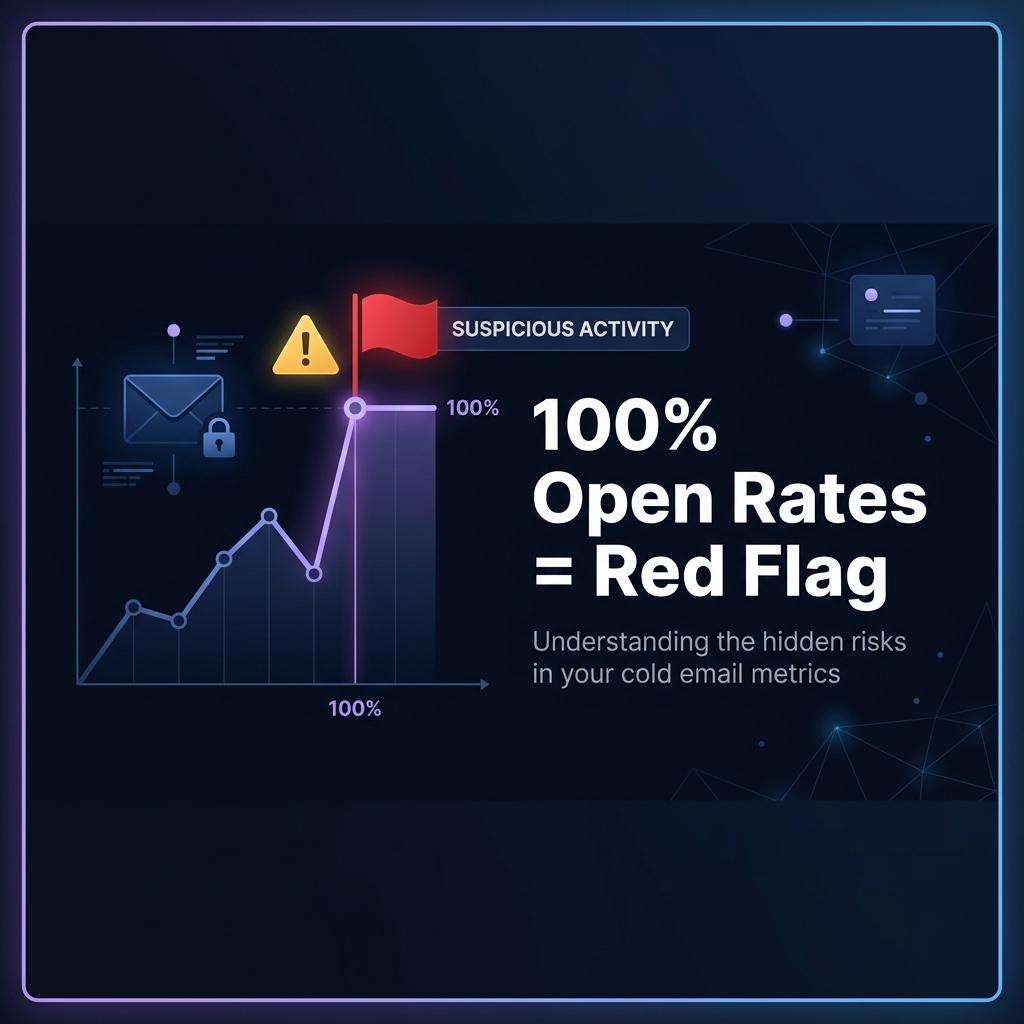
We need to talk about the vanity metric that is destroying modern outbound sales: Open Rates.
If you log into your sales engagement platform right now and see your latest sequence sitting at an 85% or 95% open rate, you might be tempted to pat yourself on the back.
Don't.
In 2026, sky-high open rates aren't a sign of copywriting mastery. They are a glaring red flag that your emails are being quarantined, scanned by enterprise security firewalls, and flagged by bot networks.
Here is why your open rate is lying to you, and what you should be measuring instead.
The Death of the Tracking Pixel
For decades, email marketers and SDRs relied on a simple mechanism to track opens: a microscopic, invisible 1x1 image pixel embedded at the bottom of an email. When the recipient opened the email, their mail client downloaded the image from the server, which registered as an "open."
This system broke permanently in 2021 when Apple introduced Mail Privacy Protection (MPP) for iOS 15, iPadOS 15, and macOS Monterey.
How Apple Killed Open Rates
MPP fundamentally changed how emails are loaded. Instead of waiting for the user to open the email, Apple's servers now pre-load and cache all email content (including tracking pixels) in the background the moment the email hits the inbox.
The result? If you send an email to a prospect using the Apple Mail app, your tracking software will register an "open" 100% of the time, regardless of whether the prospect actually looked at it.
Enterprise Security Bots: The False Positive Machine
Apple MPP isn't the only culprit. In B2B outbound, you are frequently targeting enterprise domains protected by advanced security gateways like Mimecast, Proofpoint, and Microsoft Defender.
When your cold email arrives at an enterprise server, these security systems don't just pass it along. They:
- Quarantine the email in a sandbox environment.
- "Open" the email to scan the HTML.
- Automatically click every single link in the email to check for phishing or malware.
If you are tracking open rates and click-through rates (CTR), these security bots will trigger massive spikes in your analytics. You might see a prospect "open" your email 14 times and "click" every link within 2 seconds of delivery.
That wasn't the CEO reading your pitch. That was Mimecast deciding if you belong in the spam folder.
Why Chasing Open Rates is Dangerous
When sales leaders obsess over open rates, they optimize for the wrong behaviors.
- Clickbait Subject Lines: SDRs start writing deceptive subject lines (e.g., "Quick question regarding your invoice") just to get the open. This destroys trust the moment the prospect reads the actual email, leading to immediate spam complaints.
- Ignoring Deliverability: If you think a 90% open rate means your deliverability is flawless, you might ignore critical infrastructure maintenance like DKIM and SPF rotation, right up until your domain reputation burns to the ground.
- Misaligned ICP Targeting: You might double down on a segment that shows high opens (which are actually just aggressive enterprise bots) while abandoning a segment with lower opens but higher actual engagement.
What You Should Measure Instead
If the Open Rate is dead, how do we measure campaign health? At FlowStrata, we track a hierarchy of "True Intent" metrics.
1. Positive Reply Rate
The only metric that pays the bills is the reply rate. But we take it a step further: we separate Positive Replies from Negative Replies.
If you have a 10% reply rate, but 9% are "Unsubscribe" or "Stop emailing me," your campaign is failing. Track the percentage of emails that result in a booked meeting, a referral, or a request for more information.
2. Primary Domain Deliverability (Placement)
Stop looking at opens and start looking at inbox placement. Use seed lists and deliverability monitoring tools (like GlockApps or the FlowStrata Deliverability Grader) to see what percentage of your emails are actually landing in the Primary Inbox vs. the Spam folder vs. the Promotions tab.
3. Pipeline Generated per Send
Link your outbound activity directly to revenue. How many emails did it take to generate $10,000 in qualified pipeline? This normalizes all the vanity metrics and forces the team to focus on targeting the right Ideal Customer Profile (ICP) with the right message.
The Verdict
Turn off open tracking. Seriously.
Not only will it give you a clearer picture of your actual performance, but removing the tracking pixel actually improves your deliverability. Tracking pixels are a known spam signal. By sending plain-text emails without tracking pixels, you dramatically increase your chances of bypassing those aggressive enterprise security bots and landing squarely in the primary inbox.
If you're ready to stop chasing vanity metrics and start building an outbound system optimized for booked meetings and closed revenue, let's talk about building a custom pipeline blueprint for your team.